

Bathroom Remodel
Updated Fixtures and Functional Space Planning
Bathroom Remodel in San Diego for outdated bathrooms with fixture failures, inadequate storage, or poor ventilation
Moisture accumulates behind tile and around tubs in San Diego bathrooms where inadequate ventilation and aging grout allow water penetration that rots subfloor and wall framing before visible signs appear. All Purpose Home Repair addresses these underlying issues during bathroom remodels that replace deteriorated materials, update fixture locations for better functionality, and install proper waterproofing that prevents future damage. The renovation process begins with evaluating whether your current layout maximizes available space or whether relocating the toilet, shower, or vanity would improve usability without requiring extensive plumbing modifications that add cost and extend timelines.
This service involves stripping the bathroom to studs and subfloor where water damage exists, installing moisture-resistant backer board and waterproof membranes before tile work, and coordinating fixture rough-ins with finish selections you've made. San Diego's building codes require specific ventilation rates for bathrooms without operable windows, exhaust fan capacities based on room size, and GFCI protection for all outlets near water sources—compliance items that get inspected at rough-in and final stages.
Request a consultation to assess your bathroom's current condition and discuss remodeling options that fit your space and budget constraints.
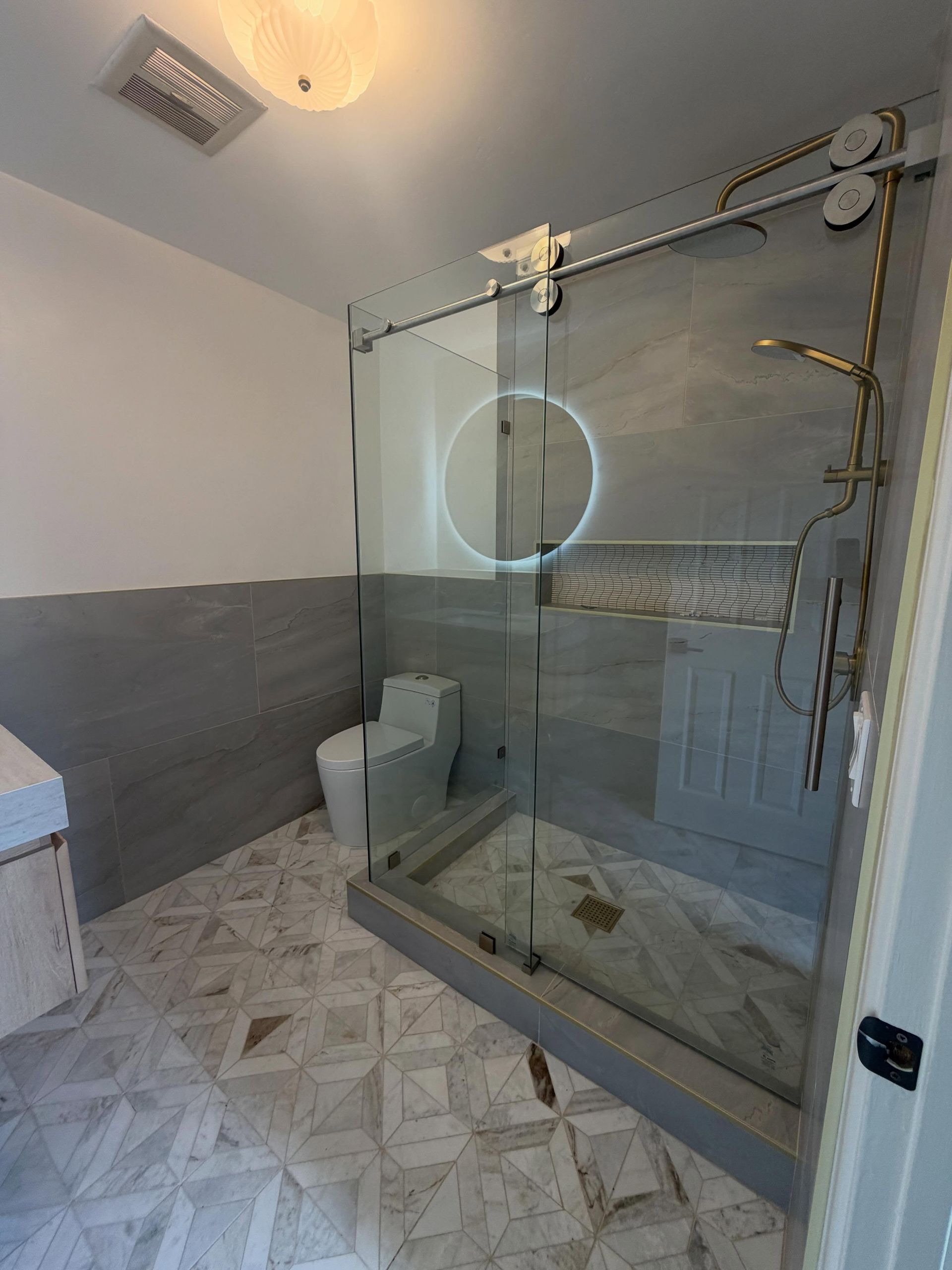
The Difference Between Surface Updates and Full Renovation
Bathroom demolition reveals whether previous water intrusion has compromised framing or subfloor that needs structural repair before new finishes can be installed safely, with soft spots in flooring or staining on wall studs indicating where leaks have occurred. Waterproofing systems get installed according to tile industry standards, with membranes applied to shower walls and floors, proper slope built into shower bases for drainage, and careful detailing where different planes meet to prevent water from finding paths behind the protective barrier. Fixture selection affects rough-in requirements—wall-mounted toilets need in-wall carriers installed during framing, while standard floor-mount models require only proper drain alignment and water supply locations.
Once your remodel finishes, you'll notice tile grout lines that align consistently, shower doors that close properly without gaps where water can escape, and fixtures mounted securely to blocking rather than just drywall. Ventilation fans exhaust moisture effectively rather than recirculating humid air, preventing the mildew growth and peeling paint that indicate inadequate air exchange in enclosed bathrooms.
The project scope determines whether you're replacing fixtures in existing locations or reconfiguring the layout entirely, with each approach affecting cost, timeline, and the extent of permit requirements. Additional factors include whether your home's water pressure supports multiple shower heads or body sprays, whether floor joists allow proper shower drain slope without lowering ceiling height in rooms below, and what vanity depth your available floor space permits without obstructing door swing.
What Homeowners Usually Ask
Bathroom renovation decisions involve understanding both the construction process and how design choices affect daily use.
What demolition reveals about hidden conditions?
Removing old tile and fixtures exposes whether water has penetrated behind surfaces to damage framing, subfloor, or drywall, with soft or discolored wood indicating areas that need repair or replacement before waterproofing and new finishes go in.
How does waterproofing prevent future damage in San Diego bathrooms?
Moisture barriers applied to cement backer board create continuous protection across walls and floors before tile installation, with careful sealing at corners, penetrations, and transitions preventing water from reaching absorbent materials where rot and mold develop over time.
What tile choices affect maintenance and longevity?
Larger format tiles mean fewer grout lines where moisture and mildew accumulate, while textured surfaces provide slip resistance in wet areas but can be harder to keep clean than smooth finishes, and natural stone requires periodic sealing unlike porcelain or ceramic options.
When does bathroom remodeling require structural modifications?
Moving plumbing fixtures often requires opening walls and floors to reroute drain lines and water supply, while adding features like larger showers may need floor joist reinforcement or drain relocation that affects rooms below in multi-story homes.
What ventilation requirements apply to San Diego bathrooms?
Code mandates either operable windows of minimum size or mechanical exhaust fans rated for the room's cubic footage, with ducting that vents outside rather than into attics where moisture causes insulation and framing problems.
All Purpose Home Repair coordinates the waterproofing, fixture installation, tile work, and finish details that determine whether your renovated bathroom functions reliably and resists moisture damage. Set up a planning meeting to review your bathroom's existing layout and discuss renovation approaches that address both aesthetic updates and underlying performance issues.