
Fence Installation
Perimeter Solutions That Define Property Lines
Fence Installation in San Diego for properties needing clear boundaries, privacy screening, or security barriers that last
Property owners in San Diego install fences to address specific observable problems: neighbors cutting through yards, lack of privacy from adjacent homes built at higher elevations, or defining property lines before disputes arise over encroachment. All Purpose Home Repair installs wood, vinyl, and ornamental fencing with post-setting methods appropriate for your soil type, which ranges from sandy coastal soils that drain quickly to clay-heavy inland areas that expand when wet and contract during dry months. The installation approach changes based on whether you're fencing flat ground, sloped terrain that requires stepping or racking the panels, or areas near mature trees whose root systems interfere with post placement.
This work involves setting posts at depths that prevent frost heave in minimal-freeze climates while still reaching stable soil, installing rails and pickets or panels that accommodate ground contours, and accounting for gate swing clearance and latch accessibility. San Diego's wind patterns, particularly in canyon areas and coastal zones, determine whether your fence needs additional bracing or closer post spacing to prevent the lateral movement that loosens fasteners and cracks rails over time.
Request a detailed estimate that accounts for your property's specific slope conditions and the fencing height required for your privacy or security needs.
What You Notice Once Fence Installation Is Finished
Fence posts get set in concrete or gravel depending on soil drainage characteristics and the fence material's weight, with depth and diameter sized to resist the wind loads typical for your microclimate. Wood fences require pressure-treated posts rated for ground contact, while vinyl and ornamental options use different anchoring methods that account for how each material responds to temperature changes—vinyl expands noticeably in direct sun, requiring specific panel-to-post connection details that allow movement without binding.
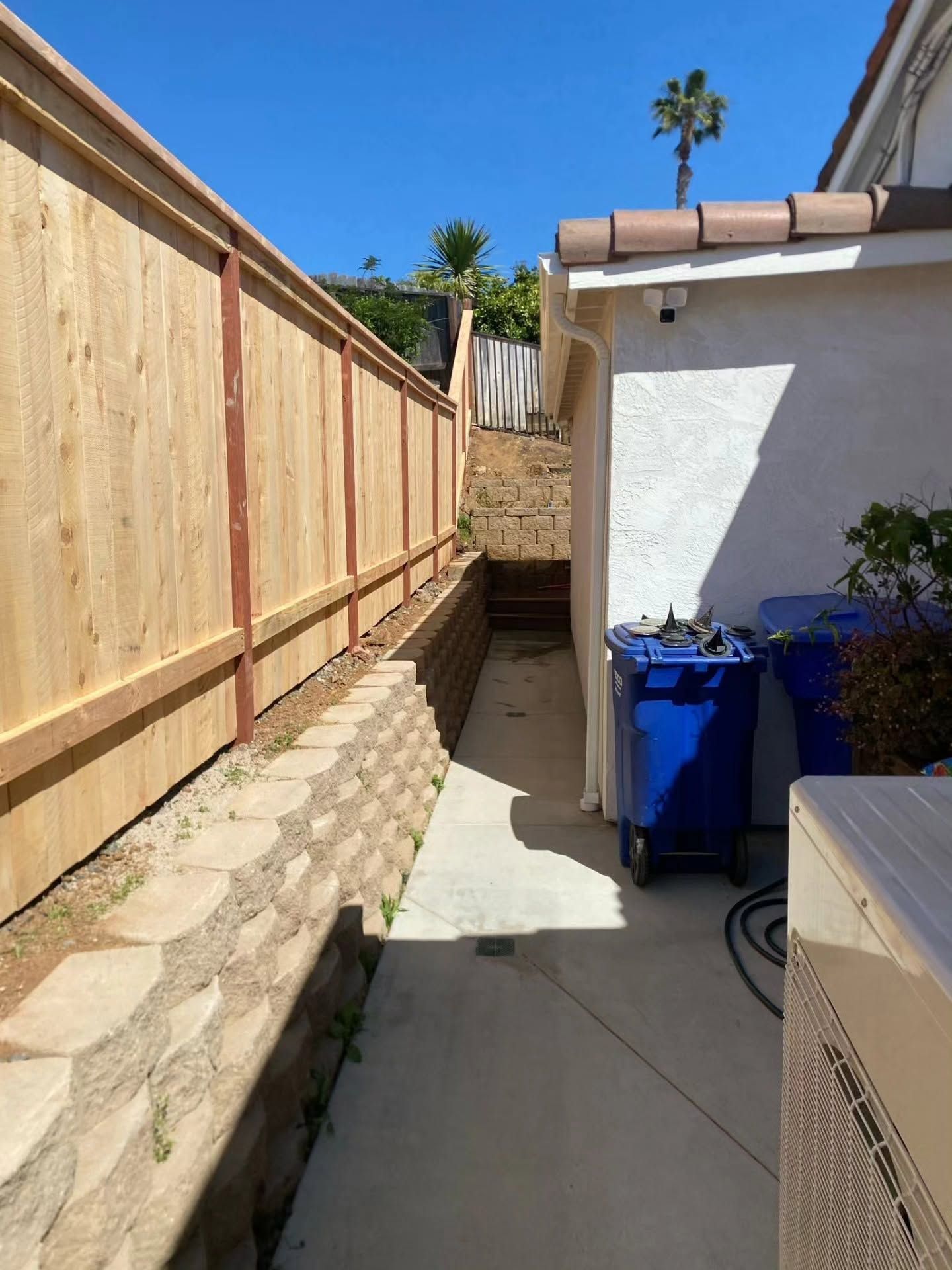
Once installation completes, you'll see a fence line that follows your property boundary accurately, posts that remain plumb rather than leaning as soil settles, and panels or pickets aligned consistently without the gaps or misalignment that develop when installers don't account for terrain changes. Gates swing smoothly and latch securely without needing constant adjustment as the structure settles into place during the first season.
The project includes corner bracing where fence lines change direction, gates sized and hinged appropriately for the opening width and expected use frequency, and finish details like post caps that shed water to prevent end-grain absorption that accelerates rot. Whether local regulations restrict fence height, require setbacks from property lines, or mandate specific styles in planned communities affects design choices before installation begins.
Common Questions About This Service
Fence installation decisions depend on understanding how different materials and methods perform in San Diego's conditions.
What post-setting method works best for San Diego soils?
Sandy soils with good drainage often use gravel-set posts that allow water to escape while providing lateral support, while clay soils benefit from concrete setting that prevents posts from shifting during seasonal expansion and contraction cycles.
How does slope affect fence installation costs and appearance?
Steep slopes require either stepped panels that create a stair-step profile or racked panels that follow the ground angle, with racking requiring custom cuts and additional labor compared to flat-ground installation using pre-built panels.
What fence materials hold up best in coastal versus inland areas?
Coastal exposure accelerates corrosion of metal fasteners and hinges while promoting mildew growth on wood, making vinyl and powder-coated ornamental options more durable, whereas inland areas with intense sun and dry heat cause faster UV degradation of plastics and can crack unseasoned wood.
When do fence projects require permits in San Diego?
Height restrictions, setback requirements from property lines, and whether the fence affects sight lines at street corners all determine permit needs, with some neighborhoods having additional HOA approval processes beyond city requirements.
What indicates a fence will stay straight long-term?
Posts set to proper depth in appropriately sized holes, concrete or gravel fill that fully surrounds the post base, and corner bracing that resists the cumulative tension from attached fence sections all prevent the gradual leaning that occurs as soil settles and materials age.
All Purpose Home Repair addresses property line verification, material selection for your specific exposure conditions, and installation methods that account for San Diego's soil and weather patterns. Schedule a property evaluation to identify fencing requirements based on your boundary layout and intended use.